New negotiations may begin after first round ended without agreement
US and Iran likely to hold second round of talks in Pakistan on Monday: Report
Washington: The United States and Iran are likely to hold a second round of talks in Pakistan on Monday, according to a media report. The report said delegations from both countries are expected to arrive over the weekend before discussions begin.
So far, neither Washington nor Tehran has officially confirmed the report. However, the possibility of fresh talks has drawn attention because tensions between the two countries remain high after the first round of negotiations failed to produce a breakthrough.
The talks are being closely watched around the world because relations between the US and Iran affect security in the Middle East, global oil prices and wider international diplomacy.
If the meeting takes place, it could become an important opportunity for both sides to reduce tensions and return to negotiations after recent sharp statements.
The latest development comes after US President Donald Trump said he was confident about progress in talks with Iran. He claimed that Iran had “agreed to everything” during earlier discussions with the United States.
Iranian officials, however, have rejected some of Trump’s claims, especially those related to the country’s uranium stockpile and nuclear programme.
Analysts say both sides appear to be sending mixed signals — publicly taking tough positions while still leaving the door open for more dialogue.
First round of talks ended without agreement
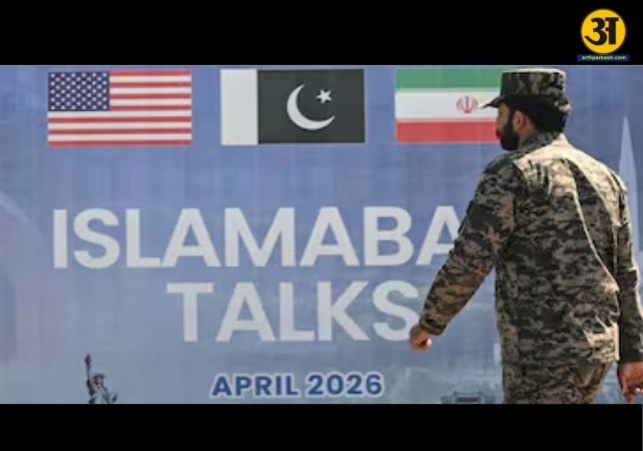
The first round of talks between the US and Iran was reportedly held in Islamabad, Pakistan’s capital. According to reports, discussions lasted for nearly 21 hours but ended without a final deal.
US Vice President JD Vance, who reportedly led the American side, said the negotiations failed because Iran did not agree to US demands over its nuclear activities.
For years, the United States and Israel have expressed concern over Iran’s nuclear programme. Both countries have said they do not want Iran to develop nuclear weapons.
Iran has repeatedly denied such intentions and says its nuclear programme is for peaceful civilian purposes such as energy production and scientific research.
Iranian officials said the earlier talks failed because the United States made what they described as unreasonable demands.
This difference remains at the centre of the dispute.
The United States wants strict guarantees and stronger limits on uranium enrichment.
Iran wants recognition of its rights, relief from pressure and respect for national sovereignty.
Experts say these issues have blocked progress for many years and continue to make negotiations difficult.
Still, the fact that both countries may meet again suggests neither side wants diplomacy to completely collapse.
Many international observers believe continued talks are better than rising confrontation.
ALSO READ: Shooting scare at Washington Navy Yard sparks security alert
ALSO READ: How Lok Sabha seats may change after the Delimitation Bill
Tensions remain high after recent statements
After the first round of talks failed, tensions rose sharply.
President Trump announced a blockade of the Strait of Hormuz, according to the report. The narrow waterway is one of the world’s most important shipping routes because a large share of global oil passes through it.
Any disruption in the Strait of Hormuz can quickly affect energy markets, shipping costs and fuel prices worldwide.
Iran criticised the move and said it violated understandings reached during recent diplomatic efforts.
Iranian officials warned that they would respond if the United States took actions against Iranian interests.
The spokesperson of Iran’s Foreign Ministry said no leniency would be shown if commitments were broken.
Such statements show how fragile the current situation remains.
Even while talks are being discussed, both countries continue to exchange warnings and accusations.
Experts say this is common in high-stakes diplomacy, where governments try to show strength at home while negotiating abroad.
If the second round of talks happens in Pakistan, the focus will likely be on lowering tensions and finding limited areas of agreement.
Possible discussion points may include:
-
Nuclear monitoring and enrichment limits
-
Removal or handling of uranium stockpiles
-
Regional security concerns
-
Shipping safety in the Gulf
-
Future diplomatic channels
-
Steps to avoid military escalation
Pakistan’s role as host may also be significant.
By providing a neutral venue, Pakistan could help both sides meet away from direct political pressure.
Diplomatic meetings often depend not only on policy differences but also on finding a place where both sides feel comfortable enough to negotiate.
For now, uncertainty remains because there has been no official confirmation from either government.
However, markets and global leaders will be watching closely over the next few days.
If talks begin on Monday, they may help cool tensions and reopen a path toward a larger agreement.
If they fail again, pressure could increase across the Middle East.
The relationship between the United States and Iran has been tense for decades, shaped by sanctions, military threats and disagreements over nuclear policy.
That is why even a small diplomatic opening is considered important.
Many observers say success may not come quickly.
Instead of a full agreement, the next meeting may simply aim to keep communication alive and prevent the crisis from deepening.
At present, the world waits to see whether the reported second round of talks in Pakistan becomes reality.
If it does, Monday could mark another key moment in one of the most closely watched diplomatic standoffs in global politics.
Related News